
Complete Homeowner Guide by Dr Clean Air
Radon mitigation is one of the most critical steps homeowners can take to protect their families from long-term health risks. Radon gas is invisible, odorless, and radioactive, yet it can accumulate inside homes and buildings without any obvious warning signs. In Canada—especially in Ottawa and surrounding regions—radon levels can be significantly higher due to geological conditions, climate, and construction practices.
Understanding how radon mitigation systems work, and which method is right for your home, is essential. This comprehensive guide explains the most effective radon mitigation techniques, the difference between active and passive systems, and how professional mitigation protects your home permanently.
What Is Radon Mitigation?
Radon mitigation is the process of reducing radon gas concentrations inside buildings to safe levels. Health Canada recommends taking action when radon levels exceed:
200 Becquerels per cubic meter (Bq/m³)
Mitigation systems work by:
- Preventing radon from entering the home
- Removing radon gas from beneath the foundation
- Venting radon safely outside
- Maintaining lower pressure inside the home than beneath it
Mitigation does not eliminate radon entirely but reduces it to safe levels.
Why Radon Mitigation Is Essential in Ottawa Homes
Several factors make radon mitigation especially important in Ottawa:
1. Geological Conditions
Ottawa sits on soil and rock formations that naturally release radon gas. This makes homes more susceptible.
2. Cold Climate and Sealed Homes
Modern homes are tightly sealed to conserve energy, which traps radon inside.
3. Basements in Most Homes
Basements provide direct contact between the home and soil, increasing radon entry risk.
4. Radon Enters All Types of Homes
Radon affects:
- New homes
- Old homes
- Detached houses
- Condos
- Townhouses
No home is immune.
How Radon Enters Homes
Radon gas enters through:
- Foundation cracks
- Basement floor joints
- Pipe openings
- Drain systems
- Sump pits
- Concrete pores
Once inside, it accumulates, especially in lower levels.
The Most Effective Radon Mitigation Method: Sub-Slab Depressurization
Sub-slab depressurization (SSD) is the gold standard for radon mitigation.
How It Works
A pipe and fan system removes radon gas from beneath your foundation before it enters your home.
Steps include:
- Drill a small hole in basement slab
- Insert PVC pipe into soil beneath foundation
- Install inline radon fan
- Vent radon gas safely outside above roof level
- Seal entry points
This creates negative pressure beneath the home.
Radon is redirected outside instead of entering.
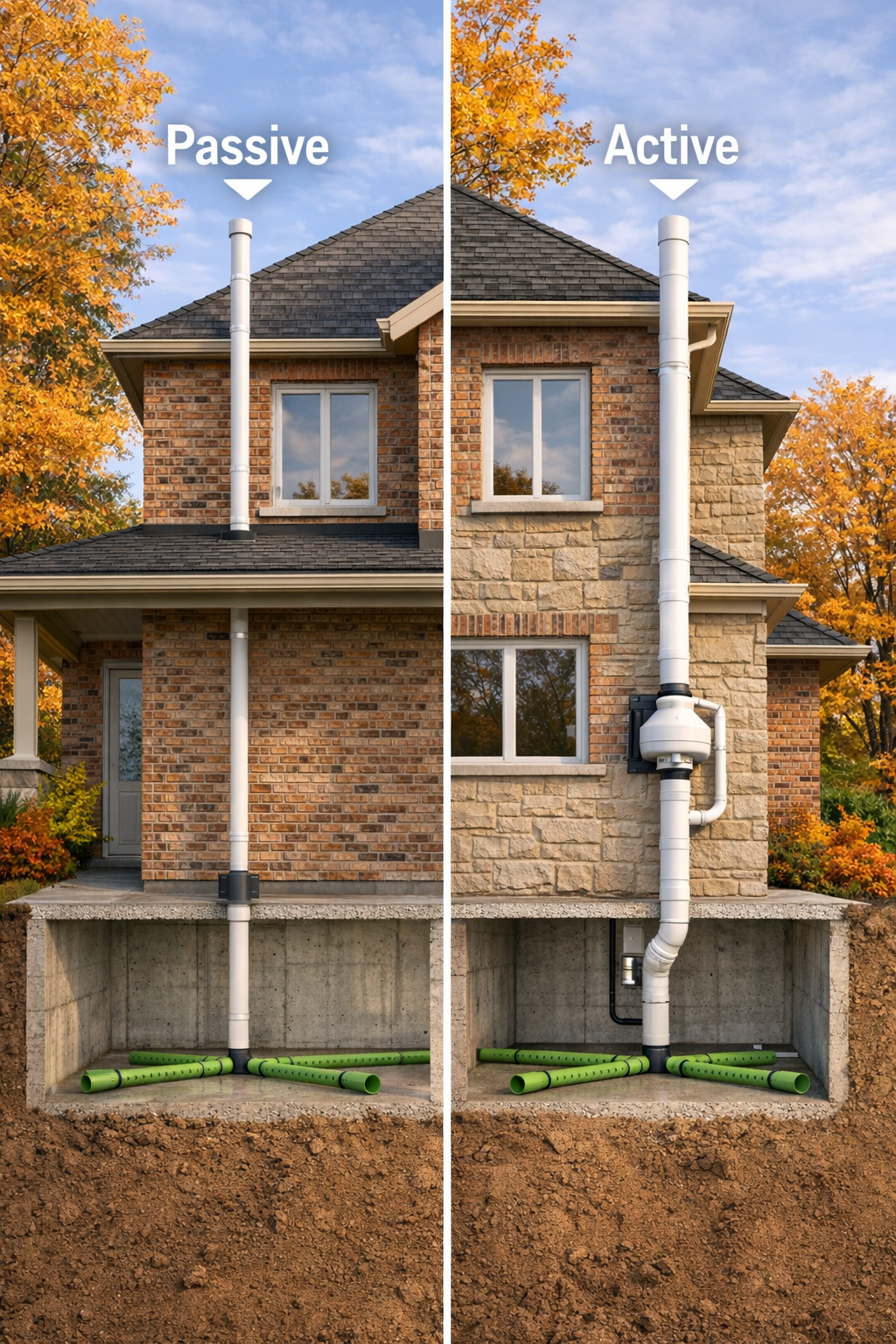
Active vs Passive Radon Mitigation Systems
Understanding the difference is essential.
Passive Radon Mitigation System
Passive systems rely on natural airflow without a fan.
Components:
- PVC vent pipe
- Sealed foundation openings
- Vent outlet above roof
How It Works:
Radon rises naturally through pipe and exits home.
Advantages:
- Lower installation cost
- No electricity required
- No mechanical components
Disadvantages:
- Less effective
- Cannot handle high radon levels
- Not suitable for most Ottawa homes
Passive systems typically reduce radon by:
30% to 50%
Often insufficient.
Active Radon Mitigation System
Active systems use a fan to continuously remove radon.
Components:
- Radon vent pipe
- High-efficiency radon fan
- Sealed foundation cracks
- Vent exhaust outlet
- Monitoring system
How It Works:
The fan actively pulls radon from beneath foundation and vents it outside.
Advantages:
- Most effective solution
- Works for high radon levels
- Permanent protection
- Reliable and consistent
Effectiveness:
Active systems reduce radon levels by:
Up to 99%
This is the recommended solution in Canada.
Why Active Mitigation Is Recommended for Ottawa Homes
Active mitigation is strongly recommended due to:
- Higher regional radon concentrations
- Cold weather sealing homes tightly
- Older foundations with cracks
- Basement-based living spaces
Active mitigation provides reliable, permanent protection.
Step-by-Step Installation Process
Professional radon mitigation typically involves:
Step 1: Radon Testing
Accurate measurement identifies radon level severity.
Step 2: System Design
Technicians evaluate:
- Home layout
- Foundation type
- Radon concentration
- Entry points
Step 3: Pipe Installation
Pipe installed through:
- Basement slab
- Crawl space
- Sump pit
Step 4: Fan Installation
Fan installed:
- Outside home
- Attic
- Garage
Fan operates continuously.
Step 5: Vent Routing
Pipe vents radon safely above roof level.
Step 6: Sealing Entry Points
Cracks and openings sealed.
Step 7: System Testing
Post-mitigation testing confirms safety.
How Effective Is Professional Radon Mitigation?
Professional mitigation typically reduces radon levels:
From:
500–2000 Bq/m³
To:
Below 100 Bq/m³
Often within 24–48 hours.
How Long Does Radon Mitigation Take?
Typical installation time:
3 to 6 hours
No major construction required.
Minimal disruption.
Where Mitigation Systems Are Installed
System location depends on home structure.
Common installation areas:
- Basement utility room
- Garage wall
- Exterior wall
- Attic
Professionals choose optimal location for efficiency and aesthetics.
Radon Mitigation for Different Home Types
Detached Homes
Most common mitigation installations.
Highly effective.
Townhouses
Shared walls require customized design.
Condos
Lower-level units more vulnerable.
Mitigation may involve shared systems.
Older Homes
May require more sealing.
Still highly effective.
Energy Consumption of Radon Mitigation Systems
Radon fans use minimal electricity.
Typical usage:
40–90 watts
Cost per year:
Approximately $40–$90 CAD
Comparable to a light bulb.
Maintenance Requirements
Radon mitigation systems require very little maintenance.
Recommended checks:
Annual inspection
Fan operation monitoring
Visual pipe inspection
Fan lifespan:
5–10 years
Replacement is simple.
Signs Your Mitigation System Is Working
Indicators include:
- Lower radon test results
- Fan running continuously
- No warning alarms
- Airflow from exhaust pipe
Professional testing confirms effectiveness.
Radon Mitigation Increases Home Value
Mitigation systems:
- Improve indoor air quality
- Increase buyer confidence
- Reduce liability
- Make homes easier to sell
Many buyers now request radon testing.
Mitigation makes homes more attractive.
Health Benefits of Radon Mitigation
Radon mitigation significantly reduces:
- Lung cancer risk
- Long-term radiation exposure
- Family health risks
Radon is the second leading cause of lung cancer after smoking.
Mitigation protects families permanently.
Why Professional Installation Is Essential
DIY mitigation is not recommended.
Professional mitigation ensures:
- Proper system design
- Maximum efficiency
- Safe vent placement
- Code compliance
- Guaranteed results
Improper installation can fail to reduce radon.
Professional service ensures safety.
How Dr Clean Air Provides Professional Radon Mitigation
Dr Clean Air offers complete radon solutions:
Professional Testing
Accurate radon measurement.
Certified Mitigation Installation
Industry-approved systems.
Permanent Radon Reduction
Long-term protection.
Fast Installation
Same-day solutions available.
Post-Mitigation Testing
Verification and safety confirmation.
How to Know If You Need Radon Mitigation
You need mitigation if:
- Radon level exceeds 200 Bq/m³
- Your home has never been tested
- You live in Ottawa region
- You spend time in basement areas
- You are buying or selling a home
Testing is the only way to know.
When to Install Radon Mitigation
Best time:
Immediately after high test result.
Radon exposure risk increases over time.
Early mitigation protects your family.
Common Myths About Radon Mitigation
Myth: Only old homes have radon
False. New homes can have high radon.
Myth: Radon mitigation is expensive
False. Mitigation is affordable and permanent.
Myth: Radon disappears on its own
False. Radon remains unless mitigated.
Myth: Opening windows fixes radon
False. Temporary and ineffective.
Mitigation is the only permanent solution.
Why Radon Mitigation Is Urgent in Ottawa
Ottawa has elevated radon risk.
Mitigation protects:
- Families
- Children
- Home value
- Indoor air safety
Delaying mitigation increases health risks.
Conclusion: Active Radon Mitigation Is the Safest and Most Effective Solution
Radon gas is a serious health risk, but it can be safely and permanently controlled with professional mitigation.
Active sub-slab depressurization is the most effective and recommended solution for Ottawa homes.
Professional mitigation provides:
- Immediate radon reduction
- Permanent protection
- Improved air quality
- Increased home safety and value
Contact Dr Clean Air for Professional Radon Mitigation in Ottawa
Dr Clean Air specializes in:
- Radon testing
- Radon mitigation installation
- Long-term radon protection
- Residential and commercial radon solutions
Protect your home and family today with professional radon mitigation.