
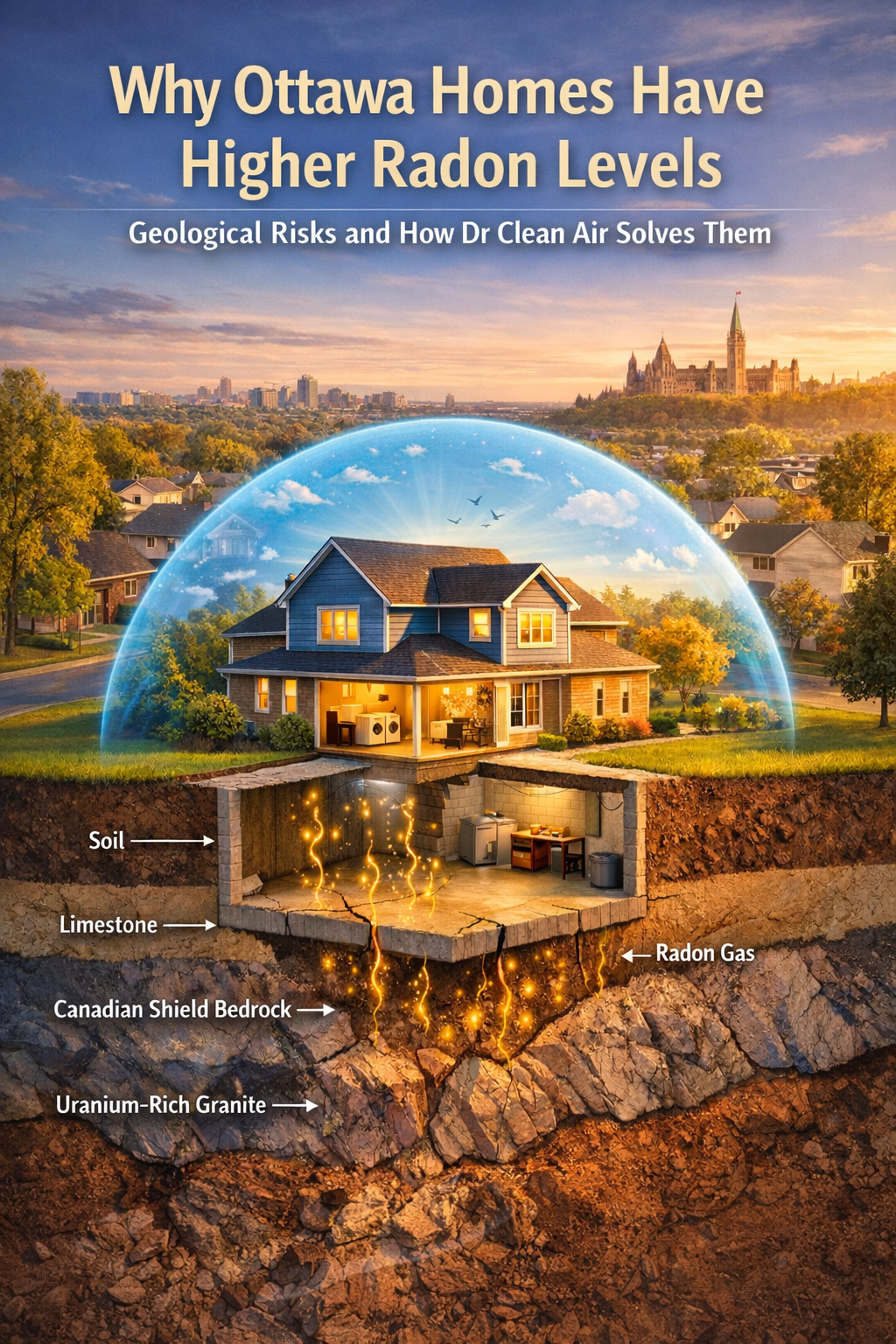
Introduction: Why Radon Is More Common in Ottawa Than Most Canadian Cities
Radon gas is a growing concern across Canada, but Ottawa stands out as one of the regions where radon exposure is particularly common. Many homeowners are surprised to discover that their home contains elevated radon levels—even in newer or well-maintained properties.
Radon is invisible, odorless, and tasteless, yet it poses one of the most serious indoor air quality risks. According to Health Canada, radon is the leading cause of lung cancer among non-smokers and the second leading cause overall.
What makes Ottawa especially vulnerable is its unique geological composition, combined with cold winters, construction methods, and modern home insulation practices.
Professional radon mitigation services from trusted companies like Dr Clean Air in Ottawa are essential to protect families and ensure safe indoor air quality.
This guide explains why Ottawa homes are at higher risk and how professional radon mitigation permanently solves the problem.
Understanding Radon Gas: A Natural but Dangerous Element
Radon is a radioactive gas produced naturally when uranium breaks down in soil and rock. This process occurs continuously beneath the earth’s surface.
Radon gas moves upward through soil and enters buildings through:
- Foundation cracks
- Basement floors
- Pipe openings
- Sump pits
- Drainage systems
Once inside, radon becomes trapped and accumulates to dangerous levels.
Because radon cannot be detected by human senses, testing is the only way to identify it.
Ottawa’s Geological Composition: The Primary Reason for Higher Radon Levels
The main reason Ottawa homes have higher radon levels lies underground.
Uranium-Rich Bedrock in Ottawa
Ottawa sits on geological formations containing uranium-bearing rock. These formations naturally release radon gas as uranium decays.
Common geological features in Ottawa include:
- Limestone formations
- Granite rock deposits
- Sedimentary rock layers
These materials produce radon continuously.
Some Ottawa neighborhoods have significantly higher radon potential than others due to variations in soil composition.
Even homes built on the same street can have very different radon levels.
Soil Permeability Allows Radon to Travel Easily
Another major factor is soil permeability.
Loose, porous soil allows radon gas to move freely toward the surface. Ottawa’s soil often contains:
- Sand
- Gravel
- Clay mixtures
These soil types allow radon gas to travel efficiently.
When homes are built on permeable soil, radon can easily reach the foundation.
Ottawa’s Cold Climate Increases Radon Exposure Risk
Ottawa’s long, cold winters create ideal conditions for radon accumulation.
The Stack Effect Explained
During winter, warm air rises inside homes and escapes through the roof. This creates negative pressure in the lower levels of the home.
This pressure difference pulls air upward from the ground—including radon gas.
This process is called the stack effect.
The colder the weather, the stronger this effect becomes.
This makes radon levels higher during winter months.
Modern Homes Are More Airtight, Which Traps Radon
Energy efficiency improvements have unintentionally increased radon exposure risk.
Modern Ottawa homes are built to conserve heat and reduce energy costs.
Features include:
- Improved insulation
- Sealed windows
- Airtight construction
- Energy-efficient designs
While these features reduce heating costs, they also trap radon inside.
Older homes allowed more natural airflow, which sometimes reduced radon accumulation.
New homes require proper radon mitigation systems.
Basements Increase Radon Risk in Ottawa Homes
Most Ottawa homes have basements due to climate and construction practices.
Basements are the closest point to soil, making them the primary entry point for radon.
Common radon entry points include:
- Basement floor cracks
- Wall cracks
- Sump pits
- Drain openings
- Pipe penetrations
Finished basements increase exposure risk because radon accumulates in living spaces.
Radon Can Affect Both New and Old Homes
A common misconception is that only older homes have radon problems.
This is false.
Radon can affect:
- New homes
- Old homes
- Large homes
- Small homes
- Luxury homes
- Rental properties
Construction quality does not prevent radon entry.
Radon comes from the ground—not from building materials.
Every Ottawa home should be tested.
Health Risks of Radon Exposure
Radon exposure is a serious health hazard.
When radon gas is inhaled, radioactive particles damage lung tissue.
Over time, this damage can lead to lung cancer.
Health Canada reports:
- Radon causes over 3,000 lung cancer deaths annually in Canada
- Long-term exposure increases cancer risk significantly
- Smokers exposed to radon face even greater risk
Radon exposure risk increases over time.
Reducing exposure protects your family’s health.
Why Radon Testing Is Essential in Ottawa
Testing is the only way to know your home’s radon levels.
Professional radon testing services from Dr Clean Air provide accurate results.
Testing includes:
- Certified radon detectors
- Proper placement techniques
- Professional analysis
- Detailed reporting
Long-term testing provides the most reliable results.
Radon Mitigation: The Permanent Solution
Radon mitigation removes radon safely from your home.
The most effective system is called sub-slab depressurization.
This system works by:
- Installing a pipe beneath the foundation
- Using a radon fan
- Pulling radon gas from below the home
- Venting radon safely outside
This prevents radon from entering indoor air.
Dr Clean Air installs professional radon mitigation systems designed specifically for Ottawa homes.
How Effective Is Professional Radon Mitigation?
Professional radon mitigation can reduce radon levels by up to 99%.
Benefits include:
- Improved air quality
- Reduced cancer risk
- Permanent radon control
- Increased home safety
- Increased property value
Professional mitigation provides long-term protection.
Why Professional Installation Matters
Improper mitigation can fail to solve the problem.
Professional technicians from Dr Clean Air ensure:
- Proper system design
- Correct pipe placement
- Safe ventilation
- Optimal fan performance
- Long-term effectiveness
Professional installation ensures reliable results.
Signs Your Ottawa Home May Have High Radon Levels
Radon has no smell or visible warning signs.
However, risk factors include:
- Basement living areas
- Foundation cracks
- Older foundations
- Poor ventilation
- Nearby homes with radon issues
Testing is essential.
Radon Mitigation Improves Property Value
Radon mitigation increases property value and buyer confidence.
Homebuyers in Ottawa increasingly request radon testing.
Homes with mitigation systems are more attractive.
Mitigation demonstrates responsible home maintenance.
Why Ottawa Homeowners Trust Dr Clean Air
Dr Clean Air is a trusted radon mitigation provider in Ottawa.
Homeowners rely on Dr Clean Air because of:
- Certified radon mitigation specialists
- Professional testing services
- Advanced mitigation systems
- Fully insured services
- Long-term warranties
- Proven results
Their expertise ensures safe and effective radon removal.
Dr Clean Air Radon Mitigation Process
The mitigation process includes:
- Professional radon testing
- Home inspection
- System design
- Mitigation installation
- Performance testing
- Long-term monitoring
This ensures maximum protection.
Radon Mitigation Is a Smart Long-Term Investment
Mitigation provides:
- Health protection
- Improved air quality
- Increased property value
- Permanent radon reduction
It protects your home and family.
When Should Ottawa Homeowners Test for Radon?
Testing is recommended:
- When purchasing a home
- Before selling a home
- Every 2–5 years
- After renovations
- If neighbors report radon
Regular testing ensures safety.
Conclusion: Ottawa Homes Face Higher Radon Risk—But the Solution Is Clear
Ottawa’s geology, climate, and construction methods increase radon risk.
Radon exposure is dangerous but preventable.
Professional testing and mitigation eliminate radon safely and permanently.
Dr Clean Air provides trusted radon mitigation services designed specifically for Ottawa homeowners.
Protect Your Home with Dr Clean Air
Radon is invisible—but the solution is clear.
Protect your family with professional radon testing and mitigation from Dr Clean Air.
Schedule your radon inspection today and ensure safe indoor air quality.